
How Old Do You Have To Be To Buy A Vape In California (Laws & Age Rules)
Posted by Kyle Wilson on Jun 19th 2025
Key Takeaways
- California law sets the minimum age for purchasing vapes at 21 years old.
- The legal age aligns with federal regulations to discourage underage vaping.
- ID verification is required for all vape purchases to prevent sales to minors.
- State laws treat vaping products similarly to tobacco, imposing strict restrictions.
- While nicotine-free vapes exist, their sale is also subject to the same age limitations.
Table of Contents
How Old Do You Have To Be To Buy A Vape In California?
California has set the legal age for purchasing vape products at 21, aligning with federal regulations. This policy applies to all vaping devices and related products, including those without nicotine. Before this change, the minimum age in California was 18, but in 2016, state lawmakers raised it to 21 as part of a larger effort to address public health concerns and reduce youth access to tobacco and vaping products. The adjustment positioned California as a leader in combating underage vaping and tobacco use.
The decision to increase the age limit stemmed from growing evidence that individuals under 21 are particularly vulnerable to the influence and appeal of vaping. Health experts emphasized that delaying access to these products decreases the likelihood of early adoption, which can lead to long-term habits. Policymakers also considered the parallels between vaping and alcohol regulations, recognizing that similar age restrictions could have a protective effect on public health. By raising the age, California aimed to prevent the normalization of vaping among young adults.
This legal change reflects a broader strategy to reduce the risks associated with vaping and to align vaping laws with those governing traditional tobacco products. It underscores the state's commitment to safeguarding its younger population from the potential consequences of early exposure to these products. Through stricter age requirements, California hopes to create a healthier environment and minimize the appeal of vaping for minors.
Can You Buy A Vape At 18 In California?
No, purchasing a vape at 18 is not allowed in California. While some states allow individuals 18 or older to purchase vape products, California aligns with federal regulations that set the minimum age at 21. This alignment ensures consistency and compliance across state and federal laws, making it illegal for retailers to sell vape products to anyone under 21.
Retailers are required to verify the age of all customers purchasing vaping products. In California, strict enforcement of this rule aims to prevent underage individuals from gaining access to these products, further bolstering public health efforts across the state.
Why Is The Legal Age For Vaping 21 In California?
In 2016, California made a landmark decision to raise the legal age for purchasing vaping products from 18 to 21. This policy shift was driven by mounting evidence that young adults are particularly vulnerable to the allure of vaping. With sleek designs and enticing flavors, vape products had gained significant traction among younger demographics, sparking concerns about early adoption leading to habitual use. Lawmakers and health advocates believed that delaying access could reduce the chances of young individuals forming long-term vaping habits.
The decision to raise the age for vaping aligned with changes to tobacco laws, which also increased the purchasing age for cigarettes and other tobacco products to 21. This consistency between vaping and tobacco regulations underscored the state's intent to treat both products as similarly impactful on public health. California lawmakers recognized the parallels between the two, including their potential for addiction and appeal to younger consumers. By integrating vaping into the same regulatory framework as tobacco, the state took a unified approach to discourage underage use.
The rationale for this change was clear: restricting access until individuals are older reduces exposure during formative years, a time when lifelong habits are often established. By increasing the legal age, California aimed to create a protective barrier, giving young adults more time to make informed decisions about vaping. This policy reflects a broader commitment to promoting public health and reducing youth engagement with potentially harmful products.
What Are The New Vaping Laws In California?
California has taken significant steps to tighten vaping laws in response to shifting trends and growing concerns over youth access. One of the most impactful recent measures is the state’s stringent enforcement of age restrictions. Individuals must be 21 or older to purchase vaping products, and retailers are required to verify the age of all customers using government-issued IDs. Enhanced ID verification aims to eliminate loopholes that previously allowed minors to purchase or gain access to vape products, strengthening the state’s efforts to reduce underage use.
Another major regulation involves restrictions on flavored vape products. California implemented a flavor ban to address the widespread appeal of fruity, candy-like, and dessert-inspired flavors, which were found to be particularly enticing to younger demographics. By prohibiting the sale of flavored vaping products, the state hopes to make these devices less appealing to minors while also discouraging first-time use. This measure complements other regulations that classify vaping products under the same stringent rules as traditional tobacco.
In addition to product and sales restrictions, California has also introduced rules governing advertising practices for vaping products. Advertisements cannot target minors, and marketing materials must comply with strict guidelines to avoid promoting vaping as a trendy or harmless activity. Retailers who fail to comply with these rules face steep penalties, including fines and potential license revocation. Through routine inspections and enforcement, California ensures these laws are followed, reinforcing its commitment to curbing youth vaping.
What Happens If You Vape Under 21 In California?
In California, individuals under 21 caught vaping or in possession of vaping products can face various legal consequences. State laws are clear in their intent to discourage underage vaping, and penalties for minors may include fines or mandatory participation in educational programs designed to raise awareness about the risks associated with vaping. These programs often focus on health education and the potential consequences of vaping, aiming to deter future use. Additionally, parents or guardians may be notified to involve them in addressing the issue and providing guidance to the minor.
Schools also play a role in enforcing vaping restrictions. Students found vaping on school grounds may face disciplinary action, including suspensions, confiscation of the vaping device, or mandatory counseling sessions. Many schools have adopted strict policies to address the rising prevalence of vaping among students, emphasizing prevention and education alongside punitive measures. The goal is to create a deterrent while offering resources to help students avoid repeat offenses.
Retailers caught selling vaping products to minors face even harsher repercussions. Penalties include hefty fines, the suspension of their business licenses, or even permanent revocation for repeat offenses. These measures highlight the seriousness with which California enforces its vaping laws, sending a clear message that underage access will not be tolerated. By targeting both users and sellers, the state aims to reduce youth vaping through comprehensive enforcement and accountability.
What Is The Stake Act And Its Role In California’s Vaping Laws?
The California STAKE (Stop Tobacco Access to Kids Enforcement) Act is a foundational piece of legislation designed to prevent underage access to tobacco and vaping products. Initially focused on restricting the sale of tobacco to minors, the act has evolved to include vaping devices as these products gained popularity. Under the STAKE Act, it is illegal for retailers to sell vaping products to individuals under 21. To ensure compliance, the law mandates that retailers verify the age of every customer through a valid, government-issued ID before completing a sale.
Enforcement is a critical component of the STAKE Act. Retailers are held directly accountable for ensuring all transactions adhere to age restrictions. Violations of the act can lead to severe penalties, including substantial fines or the suspension and revocation of business licenses. These consequences are intended to deter non-compliance and encourage businesses to adopt strict age verification practices. Routine inspections and undercover operations are conducted to ensure that retailers follow the law.
The STAKE Act plays a central role in California’s strategy to curb underage vaping and tobacco use. By targeting the point of sale, the law aims to limit access at its source, reinforcing broader public health efforts to reduce youth exposure to potentially harmful products. Its implementation reflects the state’s commitment to protecting minors and promoting responsible business practices.
Why Is An ID Required To Buy A Vape In California?
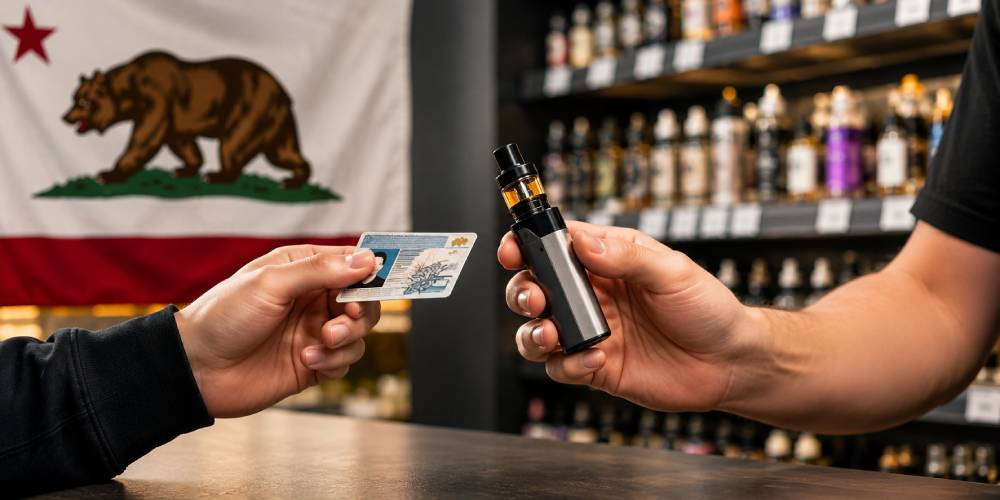
ID verification is mandatory for vape purchases in California to prevent sales to minors. Retailers are required to check government-issued IDs for all customers purchasing vape products, regardless of how old they may appear. This ensures that only individuals aged 21 or older can buy these products.
The process of verifying IDs also helps retailers avoid fines and other penalties associated with selling to minors. For adults aged 21 and older, this requirement is a small but necessary step to maintain compliance and uphold public health standards.
If you’re of legal age, consider exploring our online store, where you’ll find a wide selection of vapes to suit your preferences.
Vaping Laws By State And Federal Regulations: How Does California Compare?
California’s vaping laws are recognized as some of the strictest in the United States, showcasing the state’s dedication to protecting public health. Like federal law, California mandates a minimum age of 21 for purchasing vaping products. This alignment ensures compliance with national standards while allowing the state to introduce additional measures tailored to address specific concerns, such as youth vaping trends. By enforcing stringent regulations, California has positioned itself as a leader in combating the accessibility and appeal of vaping among young adults.
While the federal minimum age is set at 21, some states allow exceptions. For example, Alabama and Alaska permit individuals aged 19 to purchase vaping products, reflecting localized approaches to regulation. In contrast, states like Georgia and Montana still allow sales at 18 in certain contexts, despite the federal law requiring stricter enforcement. This variation highlights the patchwork of vaping laws across the country, where states balance federal guidelines with regional policies.
California stands out for going beyond federal requirements by implementing a comprehensive flavor ban and restricting vape product advertising. These measures are designed to reduce the appeal of vaping, particularly for minors, and to limit exposure to marketing that glamorizes the practice. By adopting these additional safeguards, California has set a precedent for other states considering stronger vaping regulations.
Where Can You Buy Vapes At 18 In Other States?
In some states, the legal age for purchasing vapes remains 18. States like Georgia and Montana permit vape sales to 18-year-olds, provided they comply with local regulations. These states align with the federal Tobacco 21 law by creating exceptions or delaying implementation. However, it’s essential to verify local laws, as regulations can vary widely.
If you’re traveling and plan to purchase vaping products, understanding the specific rules in your destination state is crucial to avoid any legal issues.
Can You Vape Without Nicotine In California If You’re Under 21?
In California, strict age restrictions apply to all vaping products, including those that are nicotine-free. The law does not differentiate between nicotine-containing and non-nicotine products, meaning individuals under 21 are prohibited from purchasing or possessing any type of vaping device. This uniform policy ensures that all vape products are treated the same under state regulations.
The reasoning behind this approach is rooted in the potential for vaping devices to act as a gateway to nicotine or other substance use. Even without nicotine, the act of vaping can normalize the habit and increase the likelihood of transitioning to other products.
By enforcing consistent restrictions, California aims to reduce risks and discourage underage individuals from adopting vaping behaviors. This strategy aligns with broader public health goals to curb youth exposure and foster healthier habits across the state.
Why Is There An Age Restriction On Nicotine-Free Vapes?
California enforces age restrictions on nicotine-free vape products to ensure consistency in regulation and prevent potential loopholes. Allowing unrestricted access to these devices could enable minors to experiment with vaping and later transition to nicotine-containing products, undermining efforts to reduce youth vaping.
This policy aligns with California’s broader public health strategy to discourage vaping behaviors among underage individuals. By applying uniform restrictions to all vaping devices, the state minimizes risks and reinforces its commitment to curbing youth exposure to these products.
What Age Group Uses Vapes The Most?
Vaping is most prevalent among individuals aged 18 to 34 in the United States, with the highest rates observed in the 18-24 age group. This younger demographic has embraced vaping for various reasons, including its perceived modern appeal and the wide variety of flavors available. In California, this trend has raised concerns among public health officials, leading to targeted efforts to address and reduce youth vaping rates.
For adults, vaping is often linked to smoking cessation efforts, with many viewing it as a less harmful alternative to traditional cigarettes. However, among younger users, social factors play a more significant role. Peer influence, targeted marketing, and the availability of appealing flavors have all contributed to the popularity of vaping among teens and young adults. This has prompted stricter regulations, such as flavor bans and enhanced advertising restrictions, to deter underage use.
California’s public health campaigns emphasize education and enforcement to combat youth vaping. These initiatives aim to inform young people about the potential risks of vaping while ensuring compliance with age restrictions. By addressing the factors driving youth adoption, California hopes to reverse this trend and encourage healthier choices among its youngest residents.
Is Vaping Considered A Tobacco Product In California?
In California, vaping products are legally classified as tobacco products, aligning with federal regulations. This classification applies to all vaping devices, regardless of whether they contain nicotine. By categorizing them this way, California places vaping products under the same strict rules as traditional tobacco, including age restrictions, advertising regulations, and taxation.
This uniform classification simplifies enforcement and ensures consistency across the regulatory framework. Retailers and manufacturers must comply with the same laws governing tobacco products, helping to prevent underage access and misleading marketing practices.
California’s approach reflects its commitment to public health by applying rigorous scrutiny to all vaping-related products, reducing potential loopholes and ensuring comprehensive oversight.